Journalism 360 is a joint initiative of the Online News Association, the Knight Foundation and Google News Lab that aims to increase the industry’s understanding around immersive storytelling and provide training to succeed in this space, and create a community of immersive journalists. In April, it closed submissions for $250,000 worth of grants to propel the medium forward.
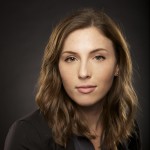
Laura Hertzfeld, director of Journalism 360
Laura Hertzfeld, the Journalism 360 director, sat down to talk about the initiative with Immersive Shooter.
Journalism360 is offering $250,000 in funding to explore immersive storytelling concepts. What types of ideas and projects do you hope to see arise?
We’ll be announcing our winners in July, but we’re hoping for a wide range of ideas. I would love to see some ideas on how to archive footage so people can experience it in the future. If we’re document history and the platform changes we need to think about how we’ll experience what we’ve done today 10 years from now. I’m very curious to solve that problem.
The second piece for me is standardizing how we talk about VR, what are the best practices in this space, and that’s something we’ve been talking about. Another part of the conversation is, of course, ethical issues. We’ve talked about an open source wiki develop to help standardize best practices. When I talk to practitioners, when I talk to people who will be working in this, everyone wants it!
Another issue that comes up a lot is spatial audio to help viewers feel like they’re in the space. It’s not the easiest thing to implement.
Ultimately, receiving a grant to do a VR documentary isn’t enough. We’re choosing projects that help establish our community and creating resources for people to learn what they need to learn to succeed in this medium.
After the grant process is complete, what’s next for Journalism 360?
We’re approaching the industry with a three-pronged approach. We want to appeal to folks at the initial level—they’ve watched a lot of 360, newsrooms are saying they need to do it and they’re interested, but they haven’t had the opportunity or means to do it themselves. We also want to serve people who are already producing 360 content but need advanced training and collaboration within the industry or across segments of the industry (gaming, advertising, entertainment, etc.). And it’s about the folks in the middle who’ve done a bit but need to learn more to get to the next level.
Part of the grant process is identifying who these people are, what they see about the industry and what they need. So, our next step is working on our training schedule and continuing to build and connect our community.
Journalism 360 also blogs about VR-related topics on Medium.
How does Journalism 360 plan to disseminate what it learns from the grant-winning projects?
We of course have our Medium blog and social feeds, but we’re planning to expand o that to help r people to search for more information. We want to have a space for people to get that information and those resources.
What’s the most surprising thing you’ve learned since joining J360?
I think it’s just the breadth of content that’s out there in this space. I was aware of some of it, but now that it’s my job to know what’s going on out there, I’m seeing just how much is being done. Seeing the applications of it in the daily news cycle and how that can expand is really exciting.
What is your favorite VR experience?
I am obsessed with Tilt Brush! I literally could live in Tilt Brush land. I could draw unicorns in outer space forever. But, as far as journalism goes, I love what the New York Times is doing by throwing things against the wall to see what sticks. Some are super produced, some are “Here’s what’s happening today.” That’s the only way we’ll learn what works.
Journalism 360 is a joint initiative of the Online News Association, the Knight Foundation and Google News Lab.
How did you get sucked into the world of VR?
My background isn’t as much in VR; it’s much more in new media evangelizing and production. My whole career I’ve been excited to be at the beginning of things.
I worked at Yahoo News in the early 2000s when people said that we’d never watch videos online. It’s too slow. But the speeds got better and now everything is video, video, video. During the 2008 election I did a project called Video Your Vote with YouTube and PBS where we sent out flip cams to nonprofit organizations around the country to gather their experience at the polls and used that to create an interactive Google Map.
So I can see that some of the concerns about VR sound the same. We’re having the same conversations about ethics that I’ve had for 15 years. The issue of speed we had back in the early days of video is coming full circle with VR.
Now, we’re talking about how we can’t get people to put the headset on, but we don’t know what the future will be. Maybe tech will come along where headsets look just totally normal. But, it isn’t really about what it will look like, it’s more about having those conversations within the industry—and now’s the time to talk about it. Our big vision is we believe in the future of immersive storytelling.
Where do you see VR going in the next year? The next 5 years?
I think next year will be about volume. More people will understand how to produce 360 content, they’ll know what makes a good piece and what doesn’t. The audience will start telling us what they engage with in a bigger way because they’ll have more to choose from.
But, 5 years? I don’t even want to guess! Five years is a long time.
What is your ultimate goal for Journalism360, and how can our community help you reach those goals?
We want to help people create amazing stories and connect the right practitioners with the right technology to build this medium up in newsrooms. We want to offer the support they to do better and to evangelize this medium to their higher ups.
Stay connected with Journalism 360 by following them on Medium and on social media. You can also sign up for a biweekly newsletter here. And, takeIndividual instance of a shot; a take = each time the camera is started and stopped. a look at J360’s impressive list of ambassadors speaking at events around the world to evangelize the future of VR in the journalism industry.