Leading up to France’s election, Euronews set out to produce a nine-part series of intimate personal portraits with voters across France and its territories. We sat down with Euronews’ VR editor Thomas Seymat to talk about what they learned about crafting a successful 360 story, their camera/kit of choice, and what’s next for the newsroom.
About the Euronews French Election 360 series
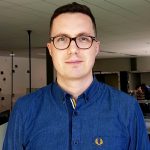
Thomas Seymat
What inspired Euronews to takeIndividual instance of a shot; a take = each time the camera is started and stopped. on this project? Why did you think it would make a good 360 project?
Like every other media outlet, we looked at the coverageMultiple shots from multiple angles to capture the events in a scene (i.e. master shot, medium shots, close-ups, inserts… More of Brexit referendum and the U.S. Presidential election. We wondered what we could do differently, or what colleagues in the U.S. and U.K. might have done wrong or if they weren’t paying attention to what was going on on the ground and staying in our bubbles. We started thinking about using spherical video to think outside the bubble, which was a bit ironic. We wanted testimony of someone looking to the camera or being very honest and having an honest discussion, as if you were in the video listening to them very closely.
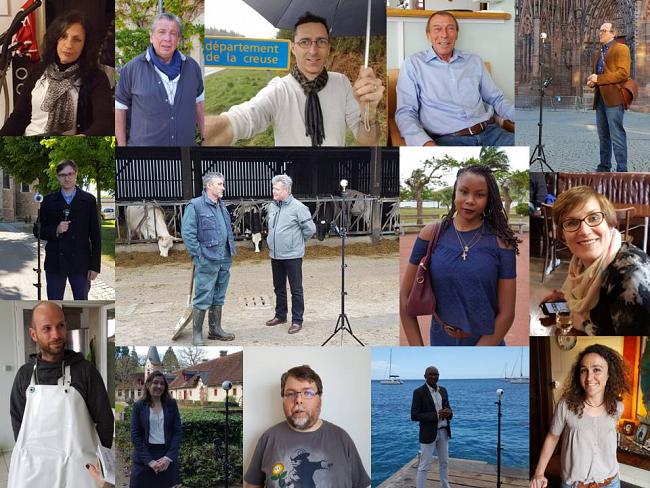
The series profiled nine voters with different backgrounds, leading up to the French election. Credit: Olivier Peguy
One of my favorite VR pieces was a piece by Reveal on sexual assault within Jehovah’s Witness communities. It gave me goosebumps. And that was shot with a Ricoh Theta S. The quality wasn’t crazy, but the story was really well done. The testimony in that piece was very touching. It affects you. That’s what we wanted to try to do.
We wanted to go into people’s homes, see the way they live, learn what they think and see how these things affect how their opinions are formed. With 360 video, you can show that rather than just mention it in an article. Does the ecosystem affect their opinions?
Did you find that to be true?
Yes and no. The first video featured an unemployed mother of three, living in the middle of France. She has a decent house—it’s not dire misery—but you can tell they aren’t living the life either. We also shot a piece with a castle owner in the Loire region who is very well traveled. She was very attached to the identity of France and said we should find our identity again. You could feel some conservative ideas beneath that. To see them in their environments, it adds a layer because we can immerse people in those environments with 360 video. We wanted to give a better picture than a TV report or article or radio piece would be able to paint.
You partnered with French local media to introduce them to immersive journalism and help you accomplish the project. Can you talk a bit about why you decided to do this, rather than takeIndividual instance of a shot; a take = each time the camera is started and stopped. on the stories alone?
This idea of immersive portraits for the election was originally our own, but became an actionable project because as a partnership with Google News Lab. Partnering with local media was something we had in mind and they agreed; they want to see more 360 video in Europe. The idea was to help introduce this new format (though some of them had already produced and commissioned 360 videos). And the reason we wanted to work with local media is they would have the best local networks. One criticism in the U.S. after the 2016 election was just that. We wanted journalists immersed in these communities to avoid parachute journalism. It was challenging to create cohesion in the series since the journalists in the videos were local journalists and they each did one video, but we worked through it.
One of the goals of partnering with smaller newsrooms was to give them some exposureThe measurement of the brightness and range (latitude) of light being captured by the camera. Exposure is governed by ca… More to immersive storytelling. What were the smaller newsrooms’ roles in production? Did they shoot? Stitch? Edit?
A Euronews producer experienced with 360 shooting, Olivier Peguy, traveled to the locations and brought the technical knowledge to local journalists, and they were responsible for the reporting.
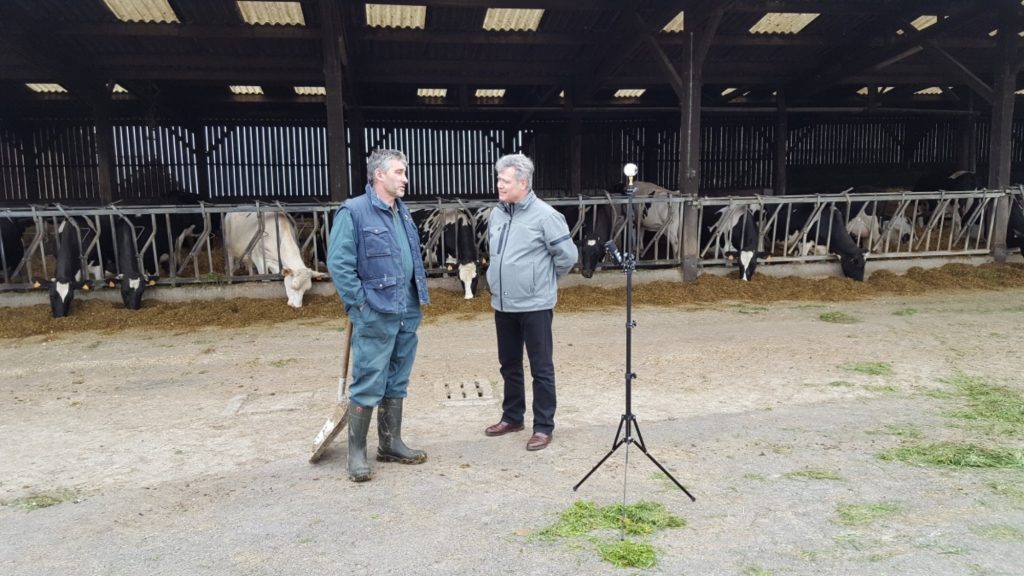
JournalistA description for the word journalist that goes on and on a bit that goes on and on a bit that goes on and on a bit. André Thomas (for Ouest France) and farmer Loïc Guines chat on camera in French Brittany for the series. Photo credit: Olivier Peguy
How has your audience responded to it? How do the views compare to traditional videos? Did most people consume via headset, mobile or desktop?
Across languages and platforms, we have reached over 1.5 million views for all 9 episodes.
The Samsung VR platform isn’t available in France and not in other European countries. The majority of our audience watches the video as a magic windowA method of viewing 360 content where a rectangular frame acts as a portal to the larger, spherical recording. The viewe… More on desktop. It’s also available on VR TV so it’ll be available on all headsets. That’s our device agnostic approach. That’s why it doesn’t matter if we had shot with an 8K camera, the screen resolutions of our audience aren’t even 4K.
Thomas’ Nuts and Bolts 360 production tips
What’s in your gear bag?
We’ve published over 95 360 videos wit Euronews using Samsung’s Gear 360 (the old version). We have a very lightweight kit, with a very light tripod, the camera and a Samsung S6. We’ve also added the Zoom H2N recorder and an external lav mic. We use the Gear because it’s lightweight, transportable, simple to use with relatively good quality. For us, it was the right balance of convenience, quality and price. You can also still stitch with Kolor, but even the Gear Director software from Samsung does the job. We’ve trained more than 40 journalists to shoot, so we don’t want to equip them with a complicated rig and a difficult post production process.
What concrete production suggestions or strategies have you learned?
Don’t limit yourself to thinking 360 is for one thing and one thing only. Sure, we shot extreme sports like free flight competitions in 360 because it’s very visual, but these pieces were very timely. We wanted to show that something less eye-catching can work, in terms of editorial outputs and in terms of clicks. Our servers did not crash from the traffic, but one of them was the most viewed story in Italian for a couple of days. We wanted to show what was possible and blaze a trail to see if other companies can learn from it.
What did you learn about which stories work best in 360?
We kept the format of the episodes the same throughout. You have an intro with journalists talking to the camera, then switch to the entrance of the place, introduce the subject, then dig in. The template gives us a sense of cohesiveness. It’s more about what the people are saying; people aren’t expecting to see something stunning. So, we didn’t go for eye-catching locations every time.
These pieces are placed in loads of different locations: alongside streets, in apartments and homes, on farms. What did you learn about which environments work and what doesn’t?
We haven’t had the time to critically reflect on what we’ve done, but some of the shots stand out, especially some of the establishing shots worked really well. The first episode on Martinique was cool, on the jetty in the water. We also focused on a lot of landmarks when we could, like the cathedral in Strasbourg, so people could identify places in the blink of an eye.
The weather was always an obstacle. Any rain in 360 you’ll see immediately. But our experience over the last nine months gave us a strong idea of what you shouldn’t do, like put a camera in the corner, too low or too high (unless that’s the effect you want to have).
What’s next for Euronews 360 video
What do you think is the biggest challenge facing immersive content producers today?
I think there are enough resources now as a journalistA description for the word journalist that goes on and on a bit that goes on and on a bit that goes on and on a bit. to start working on a video without completely guessing what you’re doing, including Journalism360. Storytelling in 360 isn’t entirely figured out, but we’re way further than we used to be. The challenge now is on the technical side in terms of gear and then platforms for distribution. Cameras are getting better in ways you’d never imagine possible 18 months ago. I’d love to see Facebook and Google give 360 content more of a boost with its reach algorithm. Then there’s also the issue of capturing footage faster than we can transfer it. That’s a big issue we’re all facing.
What is your next big project?
Our longer term main project is building our audience and monetizing the content. We’ve had a partnership with Samsung in 2016 and support from Google DNI fund, but the project needs to be self-sustained, financially. We have at euronews a marketing department to pitch sponsored content to clients for TV and they’re now incorporating 360 elements into it. It isn’t enough to self-fund the entire 360 video operation—but we’re getting there.
Follow Thomas on Twitter and on Medium to stay up-to-date on Euronews’ 360 video projects.
View all of Euronews’ 360 election series videos here.